The January You're Already Owing: Closing Workflow Loops Before the Christmas Break

As of 13 November 2026, the Christmas break still feels like a dot on the horizon. But UK teams are already saying it: 'Let's pick that up in January.' It sounds sensible. It is also a loan. Every deferred decision, half-finished handover and vague 'after Christmas' note borrows context from a future version of your team that will be busier, shorter-staffed and less interested in the details you didn't write down.
December is not dangerous because people stop working. It is dangerous because work stops in uneven patches. One person finishes on the 18th, another on the 23rd, a third checks email 'just in case' and becomes an accidental single point of failure. The workflow doesn't pause cleanly. It frays.
The festive deferral is still a decision
When a task is moved to January, it feels neutral, like putting something in a drawer. But it isn't neutral. It changes who owns the next action, what context survives, and how much restart cost January will pay. A deferred approval is not just a delay; it is a decision that the next person will make with less information. A deferred handover is not just a diary problem; it is a trust problem.
The teams that cope best with December are not the ones that work hardest in the final week. They are the ones that decide early what will close, what will park and what will be killed. That is a workflow decision, not a festive one.
What actually breaks in December
It is rarely the big system. It is the small dependency. The person who approves the invoice is on leave from the 20th. The 'quick check' needs someone from another team who has already gone quiet. The pilot owner is at the Christmas party and then away until the 4th. The spreadsheet has a note that says 'check in Jan' and no name next to it.
UK teams also have a particular December rhythm: the Christmas do, the last-minute client requests, the office that empties floor by floor, the out-of-office that says 'back on 2 January' with no cover details. None of this is a crisis on its own. Together, it turns normal workflow gaps into January surprises.
January is not an empty page
January feels like a reset. In practice, it is a short month with a long to-do list. There are budgets to confirm, targets to revisit, new priorities to absorb and a team that is still finding its pace. The deferred items do not wait politely until that settles. They arrive first, usually with less context than they had in December.
That is the hidden cost: restart cost. Re-reading the thread. Finding the file. Working out why the decision was paused. Rebooking the meeting that would have taken ten minutes in December. A task deferred for two weeks can take two hours to restart. Multiply that across a team and you have a January backlog that looks like a workload problem but is really a handover problem.
A pre-Christmas close-out checklist
None of this requires a transformation programme. It requires a boundary and a list.
- Write down every 'after Christmas' item. If it is not written down, it is not deferred. It is forgotten. Put it in one place, with a name next to it.
- Classify each item: close, park or kill. Close it if it takes under fifteen minutes. Park it with an owner, a next action, a date and enough context for someone else to pick it up. Kill it if it is not worth January's attention. Killing work is a legitimate close-out.
- Set a last safe change date. Do not make non-essential workflow changes in the final week. If a change must happen, name the person who will check it during the break and the person who will check it on 4 January.
- Check leave calendars against approvals and dependencies. Who signs off? Who has access? Who is the backup? If the answer is 'nobody', you have found a December risk.
- Record the handover, don't just describe it. A short screen recording or a three-line note beats a wiki page nobody opens. The point is not documentation for its own sake; it is context that survives the break.
- Write a January opener. One page: the first three things to do, the first three people to speak to, and the one decision that must be made in week one. This is not a plan. It is a starting line.
The twenty-minute audit
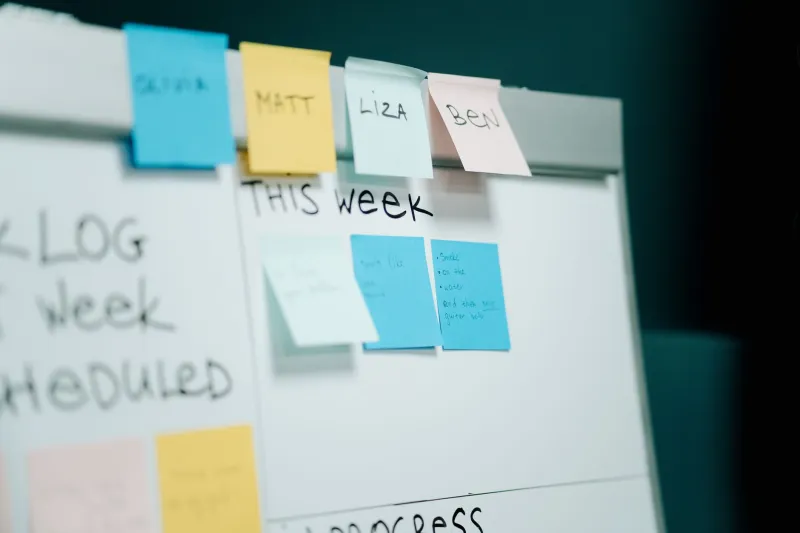
Before the Christmas do, get the team together for twenty minutes. Ask everyone to list the things they are privately planning to do 'in January'. Put them on a board. Then ask three questions: What closes this week? What needs a named owner before Friday? What are we choosing not to do?
You will not clear everything. That is fine. The aim is not a perfect December. It is a clean edge. A break works better when the work has somewhere to land.
Flux8's view is simple: change is not just the big projects. It is the small decisions about what happens next. Close the loops you can. Park the rest properly. And let January start with a list you chose, not one December left behind.