The Friday Escape Hatch: A Reversibility Check for Workflow Changes
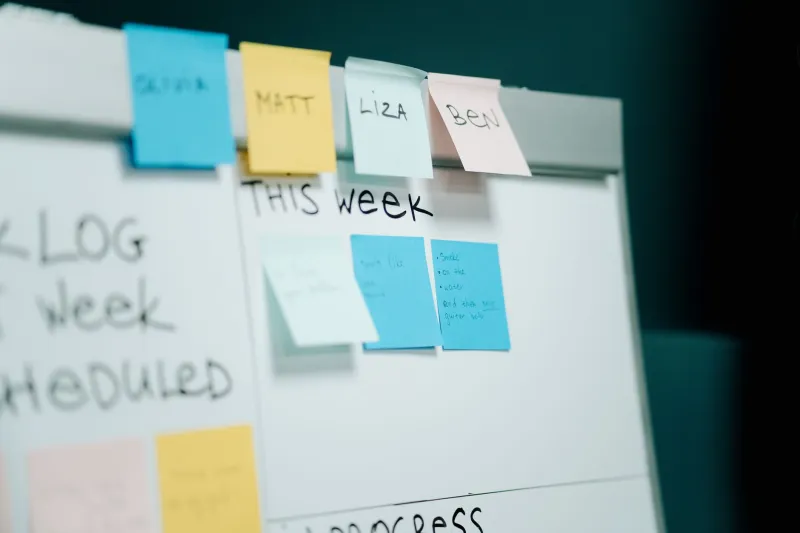
Most UK teams are quite good at the adoption conversation. There is a slide, a pilot group, a Teams channel and at least one person saying the word 'alignment' with a straight face. The exit conversation is usually less impressive. It tends to happen at 4:47pm on a Friday, in a thread that starts with: 'Sorry, quick one — how do we turn this off?'
That is not a technology problem. It is a planning problem. And it is the reason so many workflow changes feel heavier than they need to. The change itself might be small. The inability to reverse it is what makes everyone nervous.
The question before the rollout
Before you ship a workflow tweak, ask a blunt question: if this goes badly, can we get back to something sensible by Friday? Not literally this Friday, necessarily. Friday is just a useful forcing function. It stands for the next natural checkpoint in your team's week — before the invoice run, before the Monday stand-up, before the payroll cut-off, before the client report goes out.
The point is to know what 'undo' looks like before you need it. If the answer is a vague 'we'd probably just ask IT', you do not have a reversibility plan. You have a hope with a service desk ticket attached.
This is where the one-way door and two-way door idea earns its keep. Some changes are easy to walk back: a new notification setting, a pilot group, a dashboard view, a temporary approval step. Others are much harder: migrating records, changing who can approve spending, sending automated messages to customers, or teaching an entire team a new habit and then asking them to unlearn it. The second group is not automatically bad. It just needs a better escape hatch.
What makes a workflow change hard to undo
Three things usually raise the exit cost.
Data. If the change writes new records, changes fields, moves history or triggers external messages, reversing it is not just a settings switch. You need to know what happens to anything created during the experiment.
Authority. If the change alters who can approve, sign off, publish or escalate, you are messing with the social plumbing. People may have already acted on the new rules. Undoing it means telling them, clearly, that the rules have changed back.
Habit. If people have built a new routine around the change, reversal has a training cost. That is fine, but it should be named. 'We'll just tell everyone' is not a plan if 'everyone' is 40 people across three offices and one shared inbox.
A three-line test
Before rollout, put three lines in the change note. If you cannot fill them in, the change is not ready to ship at full size.
- Who pulls the plug? A named person, plus a deputy. Not 'the platform team'. Not 'the project lead'. A human being who knows they are on the hook.
- What tells us to pull it? Two or three observable signals. Approval time has doubled. Error rate is climbing. The shared inbox is filling with 'is this right?' messages. Pick signals people can actually see without a new dashboard.
- When is the last safe moment? A date and time. Before the weekly payment run. Before the customer newsletter. Before the Monday all-hands. This is the deadline for the decision, not the deadline for the undo itself.
That is it. Three lines. It takes less time than choosing the meeting background.
The undo plan template
Attach a short exit plan to any workflow change — even the small ones. One page is plenty.
- Change name and owner: what is changing, and who is accountable for it?
- Reversal owner and deputy: who can actually switch it off, and who covers leave?
- Triggers: the numbers, complaints or events that mean we stop.
- Deadline: the date and time by which the go/no-go decision must be made.
- Exit steps: the switch, config change, approval reset or manual workaround, in order.
- Data plan: what happens to records, messages and reports created during the trial.
- Comms plan: who tells staff, customers and partners, and with what wording.
- Cost cap: how many hours or pounds we are willing to spend reversing it.
- Review date: when we check whether the change should stay, shrink or go.
The template is deliberately unglamorous. That is the point. A reversibility plan should feel like a fire drill, not a strategy deck. You do not need a transformation office to write it. You need someone to spend 20 minutes thinking about the least dramatic way out.
Reversibility is not pessimism
UK teams sometimes avoid rollback planning because it feels negative. It can sound like you are expecting failure before the change has had a chance. In practice, the opposite is true. A clear exit makes people more willing to try the change, because they know the experiment has a boundary.
It also improves the change itself. When you know how you will reverse something, you tend to design it in smaller pieces. You pilot with one team instead of five. You keep the old approval route alive for a week. You avoid automating the customer email until you have watched the internal version behave for a bit. That is not caution for its own sake. It is cheaper learning.
The exit should cost less than the experiment. If reversing a workflow tweak would take longer than running it, you are not piloting. You are committing.
Make Friday boring again
A good Friday in a UK office should not involve a frantic hunt for the person who knows where the admin settings live. It should involve a short check: did the change do what we expected, and do we still want it? If not, pull the hatch.
So before the next rollout, add the three lines. Name the person. Name the trigger. Name the deadline. Then attach the undo plan and send it to the people who would have to live with the mess. If nobody can tell you how to get back by Friday, you are not ready to leave on Monday.